Shuri Hana Ori is a float weave structure that originated in Shuri, the capitol of the Ryukyu Kingdom, during the Ryukyu Kingdom period (15 – 19th century). Shuri is located on Okinawa Island, Japan. Hana means “flower” and “ori” means weaving in Japanese, therefore Shuri Hana Ori (or, Hana Ui in Ryukyuan language) is essentiallyContinue reading “The Weaving of Flowers”
Tag Archives: Ryukyu Textiles
These Bashofu Threads…

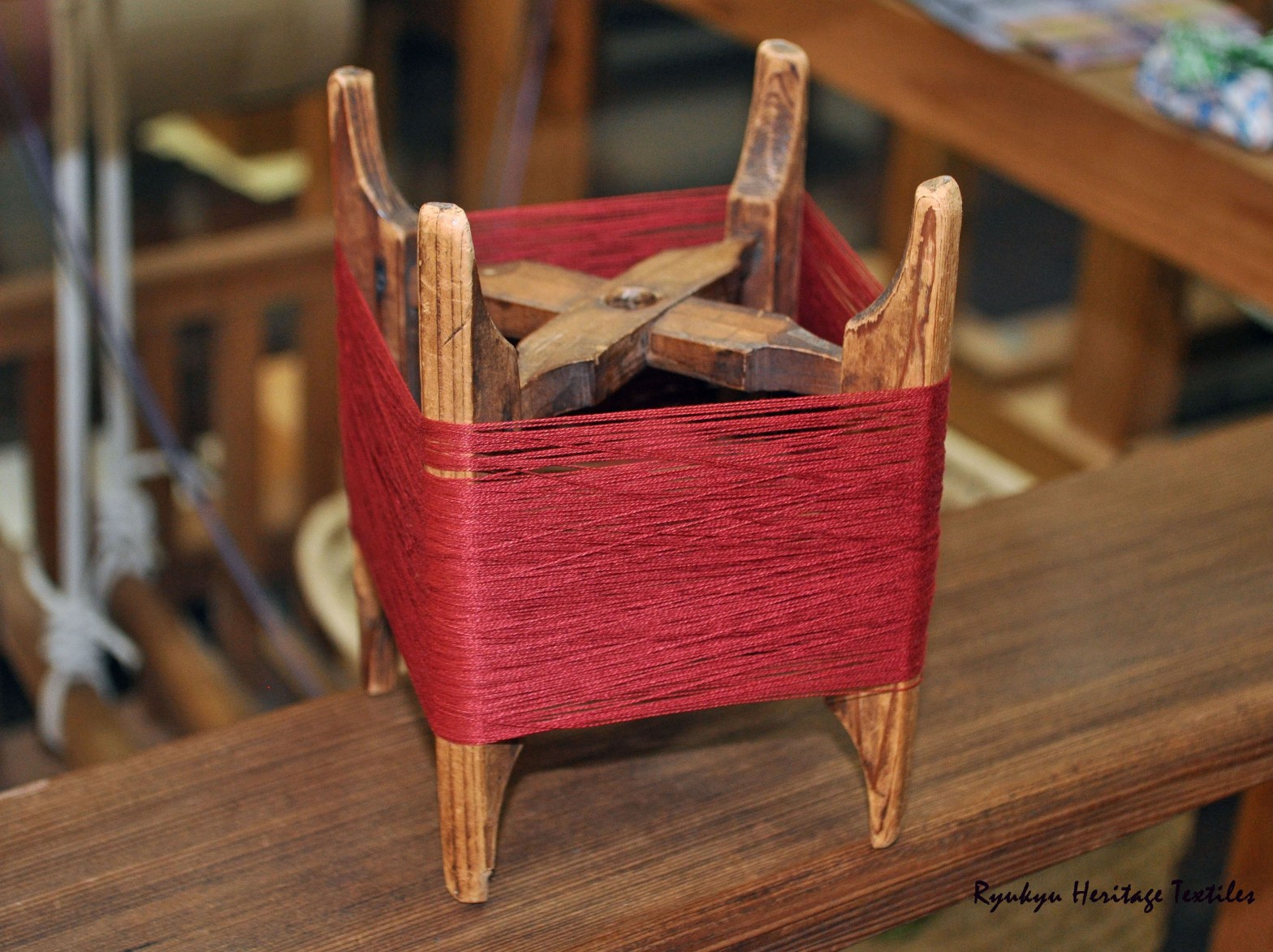
I’ve been spinning and winding these bashofu threads, and as I do, my mind spins and wanders too… What shall these bashofu threads be? A book cover, or tapestry? Or perhaps a cherished cloth for my family? These bashofu threads, once dyed and handwoven will tell a story. Like these vintage kimonos, they will documentContinue reading “These Bashofu Threads…”
Kasuri Views

in my studio begins with a Hai Sai! Let’s begin the day, shall we, with a magical tie… then let’s dip our threads, yes dip our threads into the blue dye… now our threads are drying…will tomorrow ever come? i want to untie, oh yes, untie and view those blue-white hues… then we will windContinue reading “Kasuri Views”
Houston Area Fiber Artists – November 9 and 10
“Ryukyu Weaving and Dyeing: Fabrics that Guard the Spirit” Date: November 9, 2011 Time: 7:00 pm Where: Houston Area Fiber Artists (HAFA) Meeting Location: St. Philips United Methodist Church, 5501 Beechnut, Houston, TX USA ******************************************* Date: November 10, 2011 Time: 10:30 am Where: Houston Area Fiber Artists (HAFA) Meeting Location: Tracy Gee Community Center, 3599Continue reading “Houston Area Fiber Artists – November 9 and 10”
Bingata and the Okinawa Rail
The Yanbaru Kuina, or the Okinawa Rail (Gallirallus okinawae), is a beautiful bird endemic to Okinawa Island. It is an unusual bird in that it is almost flightless. Since the Yanbaru Kuina is an endangered species, i have worked to incorporate it into my bingata artwork as a reminder for us to cherish our naturalContinue reading “Bingata and the Okinawa Rail”
Ryukyu Bingata Kimono
Traditional Ryukyu kimonos are constructed of handwoven fabric with bingata natural dye designs. The underlying fabric is also handwoven, however the weave structure differs and consists of the Kasuri Ikat style. A Hanagasa (lotus flower hat) is typically worn with the traditional bingata kimono as seen on these Ryukyu dancers… As you can see, theContinue reading “Ryukyu Bingata Kimono”
Bashofu Weaving
Records indicate that Bashofu weaving existed in the Ryukyu Islands as far back as the 1500’s… The earliest written evidence is dated 1546 from Pak Son, a shipwrecked Korean who reached the Ryukyus in 1542 where he stayed for four years before returning to Korea. Pak Son wrote the following: “The larger trees are theContinue reading “Bashofu Weaving”
Spinning the Fibers of the Ryukyus
Oh, lucky me! Recently, i attended the Contemporary Handweavers of Texas (CHT) Conference held in College Station, Texas USA. At the Conference, i participated in a 2 day bast and luxury fiber spinning class…Flax, Hemp, Ramie, Bamboo….and, ooohhh so lovely, Tussah Silk. Our instructor was Patsy Zawistoski. Patsy is a master handspinner in the United States.Continue reading “Spinning the Fibers of the Ryukyus”
Awamori
Awamori is an ancient alcoholic beverage indigenous to Okinawa. It is distilled from rice. The awamori distillation process originates from Thailand. It is different from sake, mainland Japan’s indigenous drink. Sake is brewed, and not distilled. In addition, Sake is made from short-grain Japonica rice. Awamori, on the other hand, is made from long-grain indicaContinue reading “Awamori”
Chanpuru
Chanpuru means “mixed” in the Uchina Guchi language of Okinawa. Chanpuru is used to describe many aspects of the Okinawan culture including its textile culture. Ryukyu Kasuri is a good example. Ryukyu Kasuri originated in the Ryukyu Islands during the Ryukyu Kingdom period in the 14th century. It is believed that the Ryukyu Islanders learnedContinue reading “Chanpuru”
 Scharine Kirchoff, Fiber Artist